Whole-home wellness starts with smart IAQ management
Posted: June 25, 2026 | Word Count: 934
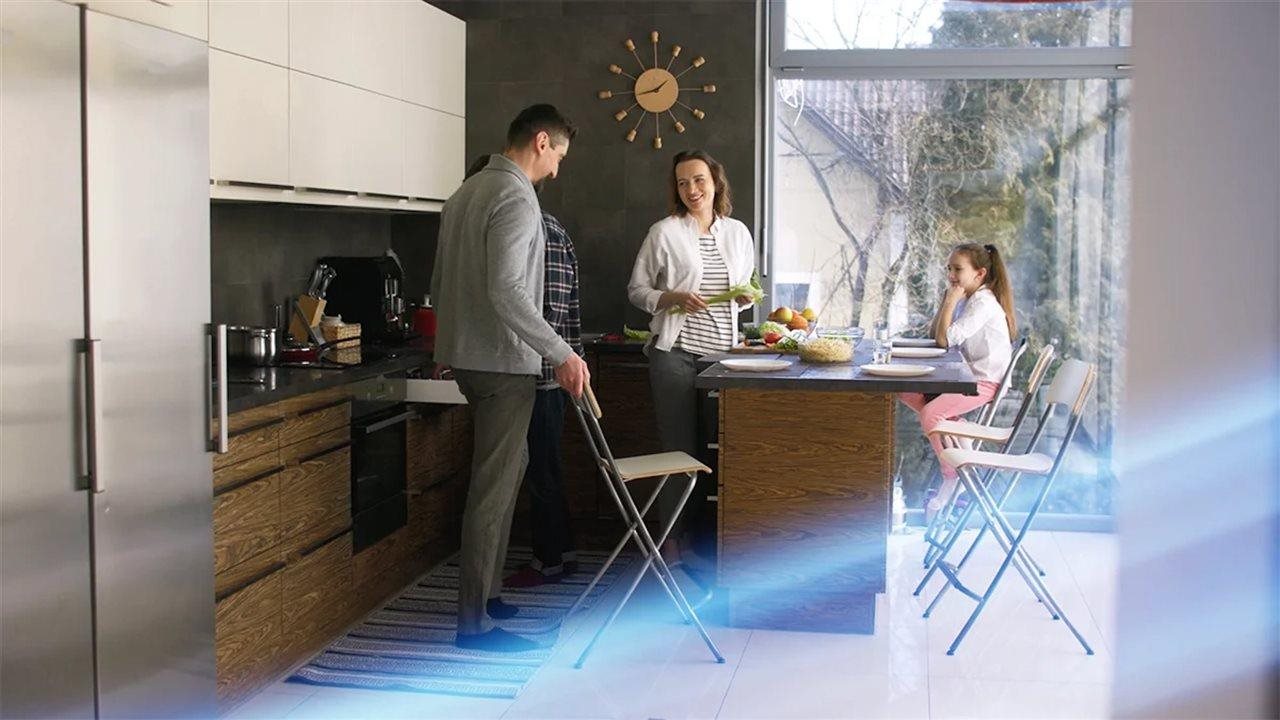
Key takeaways
- Homeowners are incorporating smart technologies throughout their homes, including solutions to improve indoor air quality (IAQ).
- Improving a home's IAQ typically involves using multiple products that don't work together.
- The Panasonic OASYS® solves this problem by continuously bringing in fresh, filtered outdoor air that is balanced with indoor air to create a healthier living environment and improve IAQ, temperature and humidity.
Modern homeowners are steadily layering technology into every corner of their homes. Whether it's a smart thermostat, voice assistants, connected security, EV chargers or app-controlled appliances, smart technology is making home life easier and — in some cases — healthier.
Take indoor air quality (IAQ), for example. According to the U.S. Environmental Protection Agency (EPA), Americans spend on average about 90% of their time indoors, where the concentration of some pollutants is often two to five times higher than typical outdoor air. Although you can't see them, these air pollutants can have very real visible effects on your health and have been associated with:
- Irritation of the eyes, nose and throat.
- Headaches, dizziness and fatigue.
- Respiratory diseases, heart disease and cancer.
There are numerous smart devices on the market to improve IAQ, including monitors, purifiers, dehumidifiers and more. However, these separate IAQ technologies don't work together, requiring homeowners to monitor and adjust the settings themselves.
Seeing the need for connected IAQ technology that works in concert, Panasonic created OASYS®, a whole-home air quality management solution that aligns comfort, air quality and energy management, providing homeowners with a true set-it-and-forget-it IAQ system.
Tech designed for integrated IAQ management from the start
Panasonic OASYS® creates a house that breathes as intentionally as it was designed. The energy-efficient system manages indoor air quality, temperature and humidity without homeowner intervention. The result? Cleaner air, balanced humidity, fewer indoor allergens and pollutants, and consistent temperature control throughout the house from the moment you walk in.
So, how exactly does OASYS® work to improve IAQ? It all begins with its fresh-air-first approach.
Improving ventilation with outdoor air is one of the fundamental strategies for reducing concentrations of indoor air pollutants. However, most home heating and cooling systems do not mechanically bring in fresh air. By flipping the traditional HVAC logic, OASYS® provides homeowners with balanced airflow to every room, including hard-to-reach areas, supporting consistent comfort and well-being of families in their home environment.
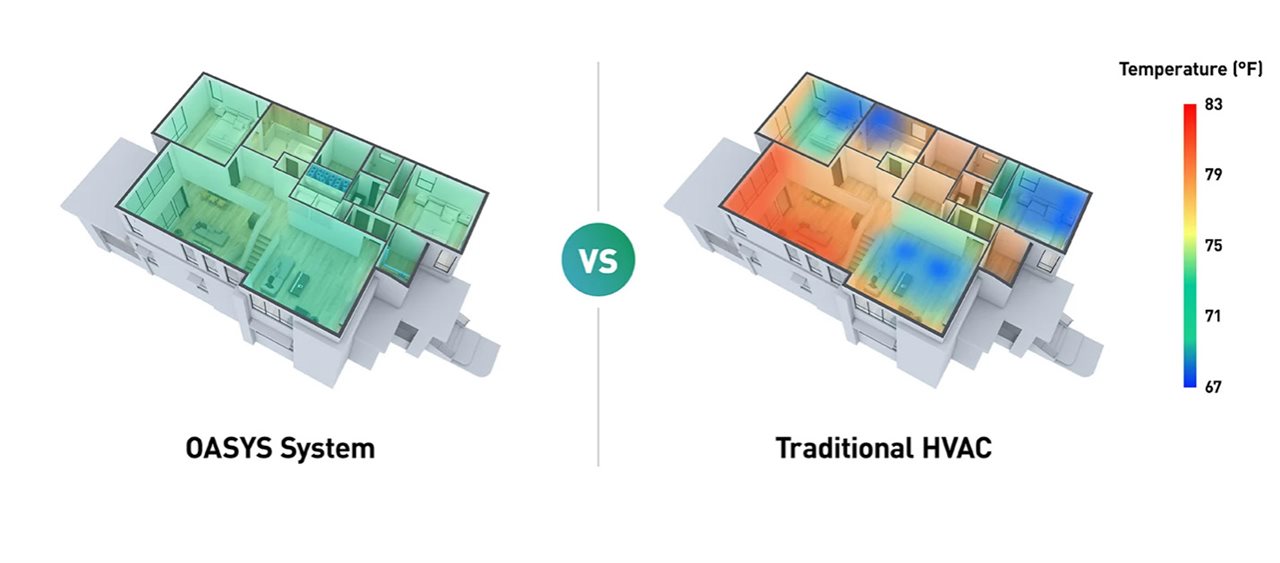
Bringing in fresh air is especially important for homeowners who are moving into a new build. Construction materials, paint, new furnishings and cleaning products emit chemical vapors known as volatile organic compounds (VOCs), a common source of air pollution. By incorporating OASYS® into building plans from the beginning, the whole-home air quality management system can reduce exposure to harmful chemicals by removing VOCs from paints, cleaning products and furnishings before you even move in.

A cleaner, more comfortable home that supports holistic wellness doesn't happen by accident. It's built that way from the start, with smart technology that works together and does the work for you.
Another benefit of OASYS® is that it uses significantly less energy than conventional HVAC technologies. This isn't theoretical. In fact, Panasonic built the Panasonic OASYS® Concept Home in Houston, Texas, as a proving ground for the system. By actively removing pollutants, allergens and excess humidity in Houston's challenging climate and air quality environment, OASYS® supports better respiratory health and reduces energy consumption by up to 53% compared to traditional HVAC systems.*
Homeowners aren't the only ones who can benefit from installing OASYS® technology in their homes. For builders and developers, it provides a compelling alternative to standard HVAC, combining energy efficiency, resilience and occupant wellness in a single solution that doesn't require users to monitor and adjust settings constantly.
Other OASYS® features that contribute to whole-home wellness include:
- Continuous ventilation: Provides a steady flow of fresh air, reducing indoor air stagnation, airborne pollutants and improving overall air quality.
- Dehumidification: Steady, balanced humidity levels to prevent mold, mildew and structural damage.
- Allergen reduction: Filters out pollen, pet dander, dust mites and other asthma triggers — ideal for sensitive individuals.
- Low maintenance: Designed for reliability and ease of use, with intuitive smart controls that require minimal upkeep.
Because OASYS® combines multiple products into one cohesive system, ongoing maintenance is simple, predictable and designed to support long-term, whole-home air quality management. Best of all, it operates in the background, reflecting a growing preference for homes that are not just connected but thoughtfully integrated.
Whole-home comfort completes the modern, high-performance home
A cleaner, more comfortable home that supports holistic wellness doesn't happen by accident. It's built that way from the start, with smart technology that works together and does the work for you. For more information on the benefits of Panasonic OASYS®, visit: iaq.na.panasonic.com/oasys.
*Based on a July 2024 analysis commissioned by Panasonic comparing the OASYS solution against conventional system designs, using a two-story, 4-bedroom, 3.5-bathroom house with light concrete tile roofing and a ventilated crawlspace underneath the first floor as the model home. Energy savings compare a Panasonic high-efficiency design, including an OASYS high-efficiency custom HVAC system and high-performance envelope, to a code minimum house design utilizing a standard gas furnace. Energy demand was converted and standardized to kilowatt hours (kWh), with the model estimating 5,932 kWh annual energy consumption for the OASYS system compared to an estimated 12,744 kWh annual energy consumption for the conventional system, a reduction in annual energy consumption of 53%. The U.S. Department of Energy's IES Virtual Environment software was used to produce an HVAC load sizing report, while the building's energy usage was assessed with the National Renewable Energy Lab's BEopt tool.
Get a free feed to have stories like this automatically added to your website.
Get Content FeedIncludes Multiple Photos
 Contact Brandpoint for licensing details
 Contact Brandpoint for licensing details
